If you’ve ever wondered who coordinates a disaster behind the scenes, look to the emergency operations center. It’s an off-scene hub where agencies share information, track resources and plan together, so field teams can focus on the incident.
This page sits within the wider topic of disaster response, which covers how communities act once a hazard hits.
| Item | Key fact |
|---|---|
| Place in NIMS | One of four NIMS Command and Coordination structures |
| Form | Fixed location, temporary facility or virtual structure |
| Typical activation levels | 3 levels: steady state, partial activation, full activation |
| Main work | Share information, support resource requests, coordinate plans |
| Activity as an incident grows | Rises with size, scope and complexity |
These figures come from FEMA’s EOC introduction and its activation levels page. Local practice can change, so check the sources before you rely on them.
What an emergency operations center is
An EOC is an off-scene facility where staff from multiple agencies and organizations coordinate support to incident operations, according to FEMA’s NIMS EOC training page. The center supports the work in the field rather than running it.
FEMA’s EOC introduction describes these centers as one of four NIMS Command and Coordination structures. They are off-site locations where people from several agencies come together to support incident command, on-scene personnel or other EOCs.
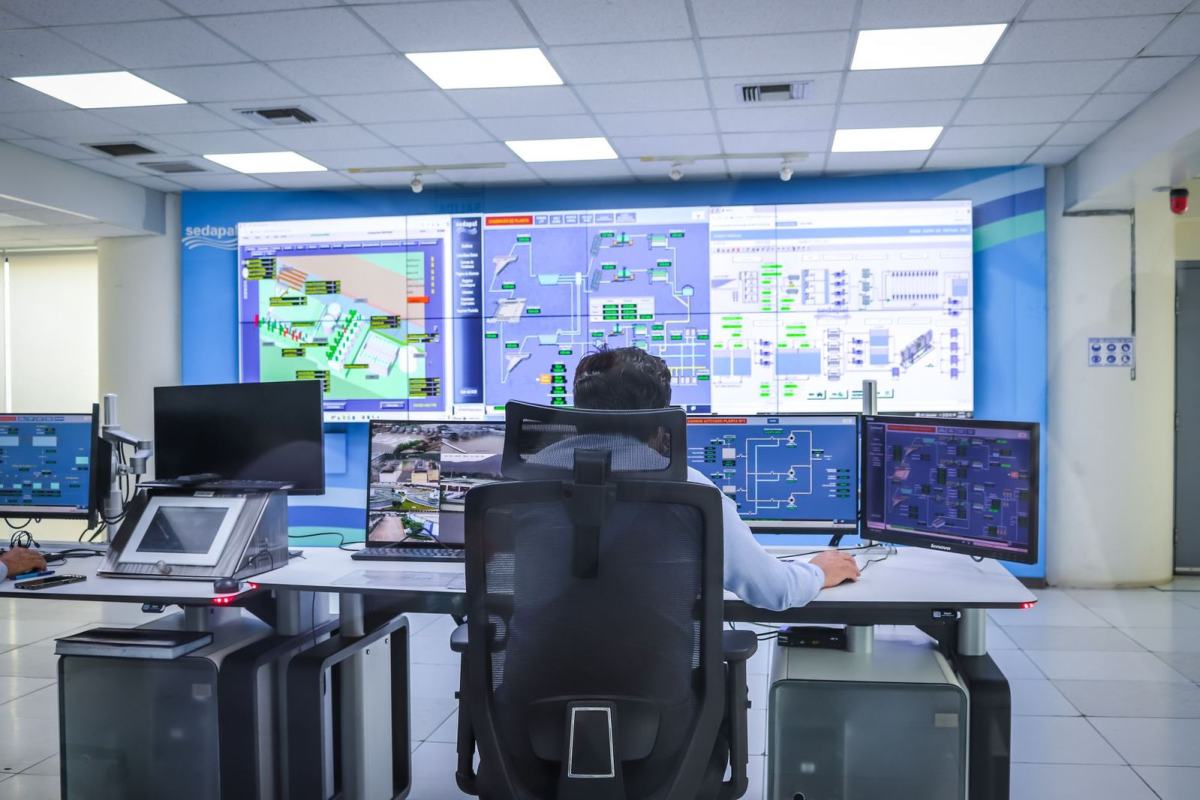
You may picture a single room full of screens, but the same page says an EOC can be a fixed location, a temporary facility or a virtual structure with staff participating remotely. It also notes that EOCs are multidisciplinary, which sets them apart from an operations center run by a single organization.
The core jobs of an EOC during a disaster
Rather than commanding on-scene actions directly, an EOC supports field teams in three main ways, per FEMA’s training material:
- Gathering critical information and sharing it with partners.
- Sourcing and tracking vital resources.
- Coordinating multiagency plans.
The FEMA introduction adds that the purpose, authorities and composition of EOCs vary widely. In some cases an EOC also provides coordination and policy direction.
The training page also says a center may coordinate across multiple incidents or jurisdictions, which is one reason a regional storm can pull in many agencies at once (FEMA).
How an EOC relates to on-scene command
FEMA explains that the incident command system manages on-scene, tactical-level response, while the EOC works off site (FEMA). If you want the field side of this relationship, the guide to the incident command system explains how on-scene command is organized.
The division of labor is spelled out in FEMA’s training page. EOCs do not normally command on-scene operations, and they instead enable situational awareness, multiagency coordination and resource support for Incident Command Posts and other field operations.
In plain terms, the people at the scene decide what to do on the ground. The EOC helps make sure they have information, resources and a coordinated plan behind them.
When an EOC activates
Emergency operations centers are activated for a variety of incidents, threats and events, according to FEMA’s activation guidance. Circumstances that might trigger activation include:
- Multiple jurisdictions or agencies are involved in an incident.
- The Incident Commander or Unified Command indicates the incident could expand rapidly, involve cascading effects or require additional resources.
- A similar incident in the past led to EOC activation.
- The EOC Director or an appointed or elected official directs activation.
- An incident is imminent, such as a predicted hurricane, flooding, hazardous weather or elevated threat levels.
- Threshold events described in an emergency operations plan occur.
- Significant impacts to the population are anticipated.
Notice that an EOC does not have to wait for damage. A forecast or an elevated threat can be enough to bring staff together.
Activation levels from steady state to full activation
Centers frequently have multiple activation levels so the response can be scaled to the incident, FEMA’s activation levels page explains. The level of activity often increases as the size, scope and complexity of the incident grow.
The FEMA table lists these activation levels:
- Level 3, normal operations or steady state: activities that are normal for the EOC when no incident or specific risk or hazard has been identified.
- Level 2, enhanced steady state or partial activation: certain team members or organizations are activated to monitor a credible threat, or to support the response to a new and potentially evolving incident.
- Level 1, full activation: the whole EOC team, including personnel from all assisting agencies, supports the response to a major incident or credible threat.
Because EOCs vary widely in purpose and composition, a local center may label its levels differently from this table.

If an incident needs more support, the EOC director may activate additional staff to involve more disciplines, mobilize resources, inform the public, address media inquiries, involve senior elected and appointed officials, and request outside assistance, as FEMA describes. Once the emergency phase winds down, attention turns to the disaster recovery process, which has its own planning and priorities.
Who works in an EOC and how they train
Personnel who will operate within EOCs follow an EOC training progression. Every Authority Having Jurisdiction determines how far individuals need to advance, based on their operational roles and the complexity of the incidents they manage (FEMA).
The baseline and mid-level courses on FEMA’s EOC training page include:
- IS-0100: a 2-hour independent study course on the history, features, principles and basic structure of ICS.
- IS-0700: a 3.5-hour independent study course giving an overview of the National Incident Management System.
- IS-2200: a self-paced online course on the role, design and function of an EOC within the Multiagency Coordination System.
The page describes IS-2200 as intended for people who work in an EOC or anyone seeking a basic understanding of EOC functions. This site is independent and offers no training or enrollment, so check with your own jurisdiction about what applies to you.
Frequently asked questions
Does an EOC take over from responders at the scene?
Show answer
Normally it does not. FEMA’s training material says the center provides situational awareness, coordination and resource support, while field operations stay with Incident Command Posts (source).
Does an EOC have to be a building?
Show answer
No. FEMA lists fixed locations, temporary facilities and virtual setups where staff join remotely as possible forms (source).
Who can order an EOC to activate?
Show answer
The EOC Director or an appointed or elected official can direct it, per FEMA’s activation page. An Incident Commander’s warning about rapid expansion is another listed trigger.
Why do EOCs use different activation levels?
Show answer
Levels let a center match its staffing and coordination to the incident instead of calling in everyone every time, as FEMA’s levels page describes. A quiet period and a major event need very different teams.