If you’ve heard responders talk about commanders, sections and staff, you may wonder who does what. The incident command system answers that: one shared structure that gives every responder a defined role and a single chain of command.
This guide is part of the site’s wider coverage of disaster response, and it is independent educational material, not official guidance.
| Item | Value |
|---|---|
| ICS 100 introductory course | 2-hour independent study course |
| IS-0700 NIMS overview | 3.5-hour independent study course |
| ICS-200 initial response course | 4-hour course |
| ICS 300 intermediate course | 3-day classroom course |
| ICS Position Specific training | 21 courses covering 25 separate ICS positions |
Course lengths and counts come from FEMA’s ICS training page and its position-specific training page. These figures can change, so check the sources before you rely on them.
What the incident command system does
The incident command system (ICS) provides a common hierarchy, terminology and set of processes for command, control and coordination at the incident site. That lets personnel from several agencies and disciplines work together effectively, according to FEMA’s ICS training page.
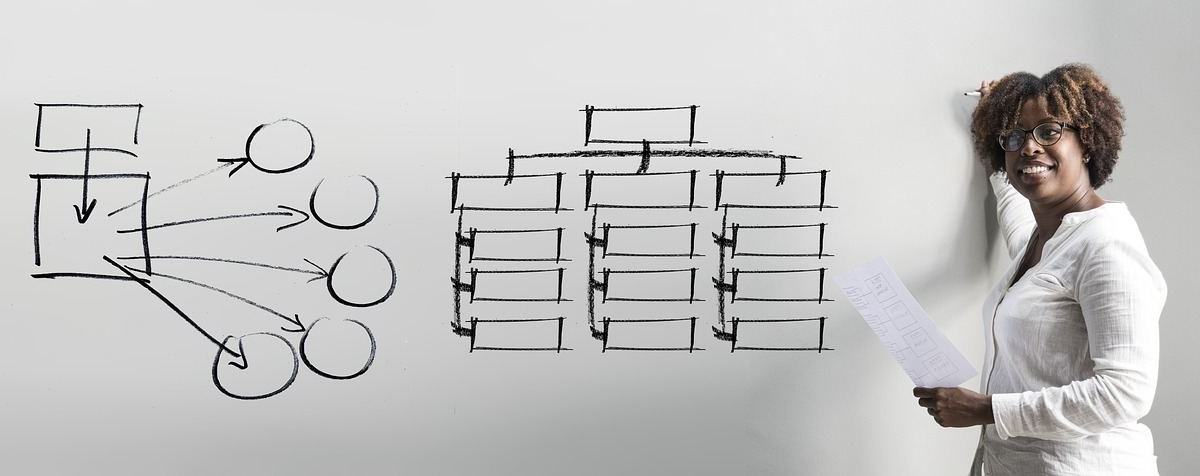
Under ICS, an Incident Commander or Unified Command sets the incident objectives. The organization then expands modularly, adding functional sections as the incident needs them.
That modular design is the point. A small event can run with one person in charge, while a large one grows into a full structure without anyone having to learn new terms.
The command roles at the top
The Incident Commander is responsible for overall incident management, as described on FEMA’s position-specific training page. That job covers several duties:
- Setting incident objectives and strategies.
- Ensuring responder and public safety.
- Establishing the incident organization.
- Approving the Incident Action Plan and the demobilization plan.
The Incident Commander also leads the Command and General Staff and manages resources. Operations are kept in line with the direction and priorities set by the Agency Administrator.
The Command Staff report directly to the Incident Commander. The same FEMA page names these roles:
- The Public Information Officer gathers, verifies, coordinates and shares accurate, accessible and timely information about the incident.
- The Safety Officer monitors and promotes responder safety.
- The Liaison Officer coordinates with assisting and cooperating agencies.
- Designated advisors give specialized advice as needed.
The functional sections that do the work
Below command, ICS organizes the work into functional sections. FEMA’s ICS training page lists them as Operations, Planning, Logistics, Finance/Administration and, as needed, Intelligence/Investigations.
- Operations
- Planning
- Logistics
- Finance/Administration
- Intelligence/Investigations, added only when the incident calls for it
Together, these sections manage resources, direct tactical actions and work toward the incident objectives safely and efficiently. Because the structure is built up from the top, a section exists only when someone needs it.

How does ICS fit with EOCs and coordination groups?
ICS is easy to confuse with the wider system around it. The USFA’s command and coordination page says ICS is a key feature of the National Incident Management System (NIMS), but Command and Coordination (C&C) is not ICS.
That page says incident C&C consists of 4 areas of responsibility:
- Tactical activities that apply resources on-scene.
- Incident support, typically at Emergency Operations Centers (EOCs).
- Policy guidance and senior-level decision-making.
- Outreach and communication with the media and the public.
An emergency operations center is where much of that incident support happens, away from the scene itself.
Multi-Agency Coordination (MAC) Groups, sometimes called policy groups, usually bring together agency administrators or executives, or their designees. They give policy guidance to incident personnel and support resource prioritization and allocation, per the same USFA page.
When incident management teams step in
An Incident Management Team (IMT) is a comprehensive resource that can enhance ongoing operations with infrastructure support. When requested, it can instead transition into an incident management function with all components of a Command and General Staff, according to the USFA’s IMT overview.
On arrival, the team’s incident commander meets the local incident commander and the agency administrator. They agree what is expected of the team and obtain any necessary delegation of authority. The team then integrates into the existing ICS structure.
The same USFA overview lists typical uses:
- Coordination of on-scene operations.
- Natural disasters such as hurricanes, floods and tornadoes.
- Public health emergencies.
- Train derailments, aircraft incidents and other large or complex accidents.
Training that matches your role
FEMA’s NDEMU describes a progressive, role-based path. The core courses come from its ICS training page:
- ICS 100 is a 2-hour independent study course on ICS history, features, principles and basic structure (FEMA).
- IS-0700 is a 3.5-hour independent study course that gives an overview of NIMS (FEMA).
- ICS-200 is a 4-hour course for people likely to take a supervisory position (FEMA).
- ICS 300 is a 3-day classroom course for future supervisors within an incident command organization (FEMA).
Most people don’t take every course. The local authority having jurisdiction (AHJ) sets how far each person goes, based on their ICS role and the size and complexity of the incident.
Position-specific training is the next tier. FEMA’s position-specific page counts 21 ICS Position Specific courses covering 25 separate ICS positions, with 7 standard prerequisites that apply to all of them.
Most of these courses are delivered by individual agencies or jurisdictions rather than routinely by FEMA. The FEMA pages point people to their state Office of Emergency Management for details.
If you are thinking about helping rather than leading, the guide on how to volunteer after a disaster is a better starting point.
Frequently asked questions
Is the incident command system the same as NIMS?
Show answer
No. ICS is one key feature inside the National Incident Management System, while the command and coordination component covers more ground, as the USFA’s NIMS page explains.
Does every responder need the same training?
Show answer
No. Nonsupervisory field personnel start with foundational courses, and FEMA’s training page notes that many will only need that baseline level.
How large is a Type 3 incident management team?
Show answer
The USFA’s IMT overview says a Type 3 team deploys with 10-20 trained personnel from several disciplines. It handles incidents that run across multiple operational periods and need a written Incident Action Plan.
Can anyone take position-specific courses?
Show answer
They are built for supervisory positions inside an ICS organization, and FEMA’s position-specific page lists a set of prerequisites to finish first. Someone who isn’t heading toward a supervisory role would normally stop earlier in the progression.