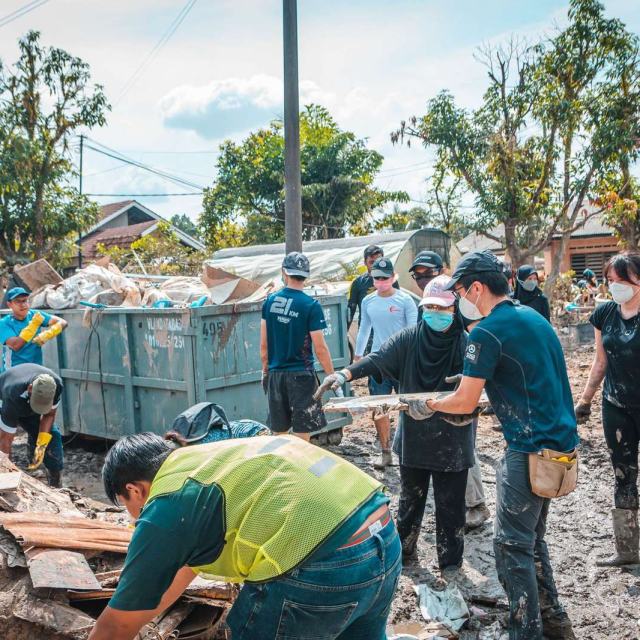

If you’re wondering what happens after the water recedes, a disaster damage assessment is the structured record of what was damaged, where and how badly. It shapes whether outside help arrives.
This page is part of the site’s wider coverage of disaster response, where assessment is among the earliest tasks.
| Item | Value |
|---|---|
| Deadline to request a presidential declaration | No later than 30 days after the incident occurs |
| When a joint preliminary damage assessment is requested | When an incident may exceed state, local, tribal or territorial capabilities |
| Assistance under an expedited declaration request | Generally limited to immediate needs based on rapid assessments |
| Ways to document damage | Annotated maps, photographs and other documentation |
| Length of FEMA’s documentation course | Approximately 8 hours |
These figures come from FEMA training pages on presidential declarations and documenting disaster damage. They can change, so check the source before you rely on them.
What a disaster damage assessment actually records
At its core, an assessment is a record of damage: its type, its location and a description. FEMA’s training on recording data for reporting says this includes mapping the damage, plus videos or photographs when possible.
Accuracy matters because the same page warns that inaccurate or incomplete information can cause an inappropriate distribution of resources through poorly set priorities. It can also contribute to a delayed or denied Presidential declaration of disaster.
In practice, a good record answers a short list of questions:
- What kind of damage is it?
- Where exactly is it?
- What does it look like, in words and in images?
- Where does it sit on a map?
How does an assessment move from local to federal level?
Information travels upward in steps, according to the same FEMA page on recording data and the presidential declarations lesson:
- Local officials record the damage and report it to state officials.
- The state compiles the local information into a report for Federal officials, often as part of a request for additional assistance.
- If a State, Territorial or Tribal government decides an incident may exceed its capabilities, it requests a joint Preliminary Damage Assessment with FEMA.
- Federal, state, local and tribal officials, and certain private nonprofit organizations, work together to estimate and document the impact and magnitude of the incident.
The Governor or Tribal Chief Executive may then ask the President, through FEMA, for a declaration. The request must be submitted no later than 30 days after the incident occurs, and FEMA’s lesson says the deadline may be extended if a written extension request arrives within that same 30 days and states the reason for the delay.
For how jurisdictions share staff and equipment before outside help is formally in place, see the guide to mutual aid agreements emergency management.
Expedited requests and what they change
After a severe or catastrophic event, a request can go in before the preliminary assessment is finished. FEMA calls this an expedited declaration request, as described on its declarations page.
Help in that situation is generally limited to immediate needs, based on rapid assessments, until the assessment is complete. A declaration itself establishes the type of incident, the incident period, designated areas, types of assistance, the federal cost share and a Federal Coordinating Officer.
What documentation do assessors collect?
FEMA’s documentation course for Public Assistance applicants covers several ways to show damage. Its objectives include annotated maps, photographs and other documentation, plus uploading and organizing files into the Grants Portal.
- Written descriptions of the type and location of damage
- Annotated maps that pin damage to a place
- Photographs and, where possible, video
- Files organized and uploaded so reviewers can find them
The course is designed so that applicants can identify the documentation requirements for grant funding and learn how FEMA communicates them through the Essential Elements of Information process.

Why pre-disaster conditions matter
Showing damage is only half the job; applicants must also show it was caused by the event. In its lesson on documenting pre-disaster conditions, FEMA says it requires documentation of the pre-disaster condition of damaged roads and culverts.
That evidence demonstrates that the damage happened during the incident rather than before it. The same lesson says regular maintenance is not eligible for Public Assistance funding, and that repairs to potholes or fatigue cracking are generally ineligible because such damage is rarely caused by a single incident.
Once damage is documented and funding decisions begin, the work shifts toward the disaster recovery process, which this site covers separately.
Tools, forms and backup plans
Forms are chosen during planning, and FEMA’s recording-data page says they must be completed correctly and efficiently so impact information is reported in a timely way. Digital tools help with that.
- HAZUS-MH can be useful at this stage, and the page states FEMA will accept it for preliminary damage assessment. The page shows no date, so confirm this with FEMA.
- GIS helps identify where infrastructure sits and what damage is associated with it.
- Where records are electronic, a backup plan should cover technological difficulties, and paper copies of the forms are advisable.
The page sums up the recipe plainly: an up-to-date damage assessment plan, the correct forms and properly trained assessors.
Frequently asked questions
Who asks for a presidential declaration?
Show answer
Per FEMA’s declarations lesson, the Governor or a Tribal Chief Executive makes the request to the President through FEMA. A tribal government can choose to be a Recipient or Subrecipient under a State or Territorial declaration, or ask for its own.
Can a request be filed before the assessment is done?
Show answer
Yes, for severe or catastrophic events. Aid then covers urgent needs identified through rapid assessments until the joint review wraps up, as the FEMA lesson explains.
What goes wrong when records are incomplete?
Show answer
Priorities can be set badly, resources can end up in the wrong places, environmental harm may grow, and a declaration can be held up or refused, according to FEMA’s training.
Does routine road upkeep qualify for funding?
Show answer
Not under FEMA’s road and culvert lesson. Regular maintenance is ineligible, and pothole or fatigue-crack repairs are generally excluded.
How long does FEMA’s documentation course take?
Show answer
FEMA’s course page puts the lesson at roughly 8 hours. It is aimed at State, Local, Tribal and Territorial applicants and recipients.