
Not sure what belongs in your emergency preparedness kit? Start with water, food, light, a radio, first aid and key documents, then tailor it to your household and the hazards where you live.
This guide is one part of the site’s wider coverage of emergency preparedness, focused on what to pack, where to keep it and how to keep it ready.
| Item | Value |
|---|---|
| Water per person | One gallon per person, per day |
| Water and food for evacuation | 3-day supply |
| Water and food for home | 2-week supply |
| Medications | 7-day supply |
| Radio | Battery-powered or hand-crank, NOAA Weather Radio if possible |
These figures come from the American Red Cross survival kit supplies page. Recommendations can change, so check the source before you rely on them.
What goes in a basic emergency preparedness kit?
The American Red Cross describes a kit as supplies stored in an easy-to-carry container that you can use at home or take with you if you must evacuate, according to its survival kit page. The same page says that, at a minimum, you should have the basic supplies on its list.
That basic list covers the following items:
- Water and non-perishable, easy-to-prepare food
- A flashlight, extra batteries and a battery-powered or hand-crank radio
- A first aid kit, medications and other medical items
- A multi-purpose tool
- Sanitation and personal hygiene items
- Copies of personal documents
- A cell phone with chargers
- Family and emergency contact information
- Extra cash, an emergency blanket and maps of the area
Read as a whole, the list is about keeping going when normal services are interrupted. It gives you light, news, basic health care, communication, money and paperwork in one place.
The documents entry is the one people most often skip. The source suggests copies of a medication list and pertinent medical information, proof of address, a deed or lease to your home, passports, birth certificates and insurance policies, as listed by the Red Cross.
Water and food: how much to store
The Red Cross list sets one gallon per person, per day for water. It splits the quantity by situation: a 3-day supply for evacuation and a 2-week supply for home, as shown on the source page.
Food follows the same split, and the page asks for non-perishable, easy-to-prepare items. Multiply your household’s daily needs by every person who lives with you, and count pets separately, since the source also lists pet food.
A small kit you can carry and a larger stock you keep in place are two different jobs. Treating them separately stops you from lugging a heavy home stockpile out of the door.
Tools, power and communication
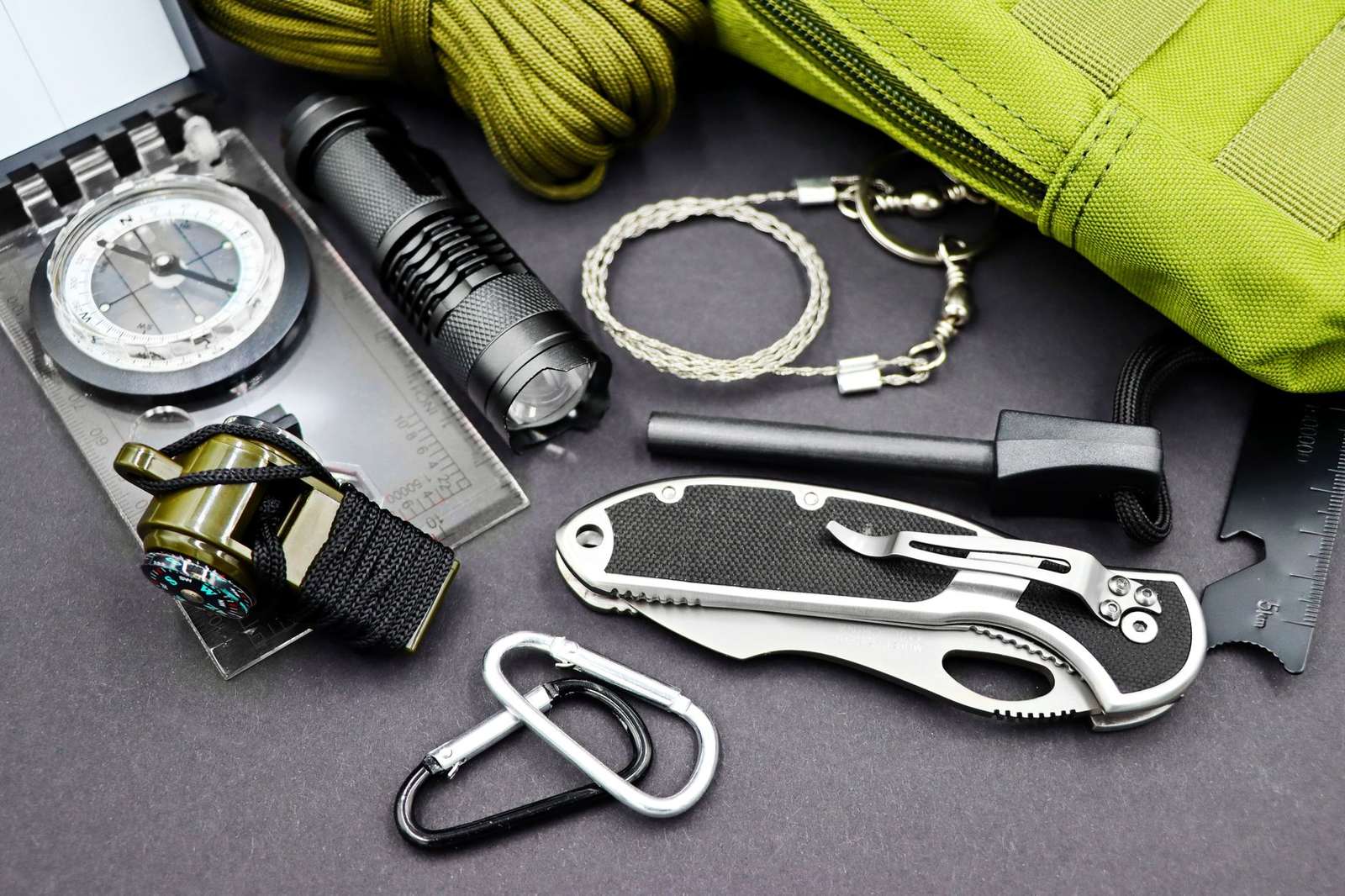
Several items on the list exist to keep you informed and reachable. The source names a NOAA Weather Radio where possible, alongside a flashlight, extra batteries and a cell phone with chargers, per the Red Cross page.
Think of it as layers, so that one failure does not leave you without a way to get news:
- A hand-crank radio keeps working when batteries run out.
- Spare batteries keep the flashlight and any battery radio going.
- Chargers help the phone, though a phone is only one part of the plan.
- Two-way radios let household members stay in touch if they are separated.
- A whistle is a simple way to signal for attention.
Written copies of family and emergency contacts matter because a phone can be lost, damaged or out of charge. Pair them with a family emergency plan so everyone knows where the kit is kept and who to contact.
Personalising the kit for your household
Once the basics are packed, the Red Cross suggests adding unique things each family member may need. Its examples, from the survival kit list, include:
- Medical supplies such as hearing aids with extra batteries, glasses, contact lenses and syringes
- Baby supplies: bottles, formula, baby food and diapers
- Games and activities for children
- Pet supplies: collar, leash, ID, food, carrier and bowl
- An extra set of car keys and house keys, plus a manual can opener
The page also asks you to think about the disasters common where you live. Extra items it mentions for that purpose include rain gear, work gloves, plastic sheeting, duct tape, scissors, household liquid bleach, blankets or sleeping bags and sturdy shoes.
A hazard vulnerability assessment is one way to work out which risks near you deserve that extra space. Someone in a flood-prone area and someone in a cold-weather region may end up with quite different add-ons.
On medications, the source lists a 7-day supply along with medical items, per the same page. This site cannot give medical advice, so ask a doctor or pharmacist what suits your own situation.
Storage and maintenance habits
A kit only helps if you can find it and trust what is inside. Keep the grab-and-go version somewhere everyone in the household can reach quickly, and keep the larger home stock where it is easy to rotate.
These are practical habits rather than rules from the source, so adapt them to your space:
- Pick a regular date to open the kit and check it, such as when the seasons change.
- Test the flashlight and radio, and replace batteries that are old or weak.
- Look at dates on food and any other items that expire, and swap them for fresh ones.
- Update document copies and contact lists when addresses, policies or phone numbers change.
- Revisit the contents when someone joins the household, a child grows or a pet is added.
- Write down what you used so you can replace it straight away.
Keeping the kit in a container you can carry also makes checks easier. Store heavy water at a sensible height so no one strains to lift it.
Frequently asked questions
How much water does each person need?
Show answer
Plan on a gallon a day for every person, as the Red Cross list does. A bag you carry out needs less than the stock you keep indoors.
Can I buy a ready-made kit instead of building one?
Show answer
You can, but compare any pre-packed product with a checklist before you trust it. Then add the personal items that a generic box will not hold, such as prescriptions, spare glasses or pet supplies.
What should I do about children and babies?
Show answer
The source suggests baby supplies like bottles, formula, baby food and diapers, plus games and activities for children. Familiar items can make a stressful day easier for them, so pack things they already use.
Do I need different kits for home and for leaving?
Show answer
Many households find two layers work best: a compact bag for leaving quickly and a bigger store of supplies at home. Both draw on the same checklist, and the difference is mostly quantity and weight.
Where is the best place to keep a kit?
Show answer
Choose a spot that is dry, easy to reach and known to everyone who lives with you. Avoid burying it behind other storage, because a kit you cannot find in a hurry does not help.